What are the Livarix Capsules supplement facts?
The Livarix Capsules supplement facts we can give come from the sales page, not from a panel photo: eight ingredients with amounts totalling 780 mg, and a direction of two capsules a day. We did not see the Supplement Facts panel itself, so the serving size, other ingredients and warnings are unconfirmed.
This page sets out what is known, what is missing and how to read the panel on your own bottle. Where the panel and this page disagree, the panel wins. If you can send a clear photo of the panel to the site owner, we will update every page that uses these figures.
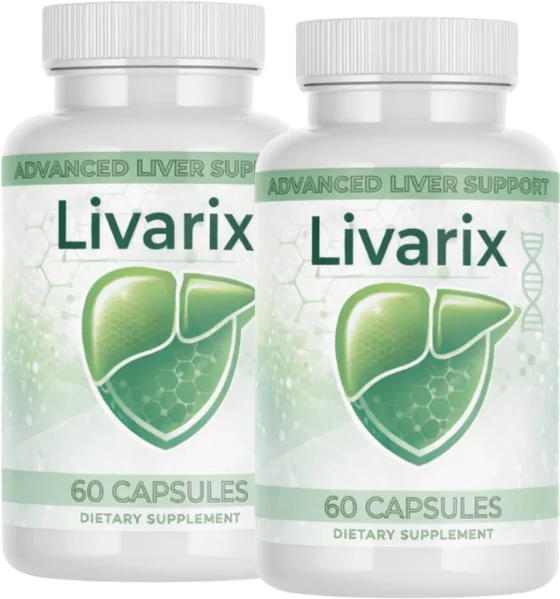
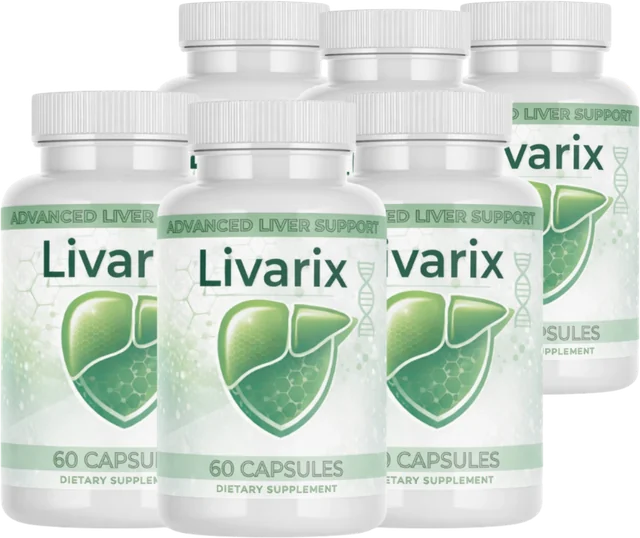
| Form | Capsules, 60 per bottle (printed on the label) |
|---|---|
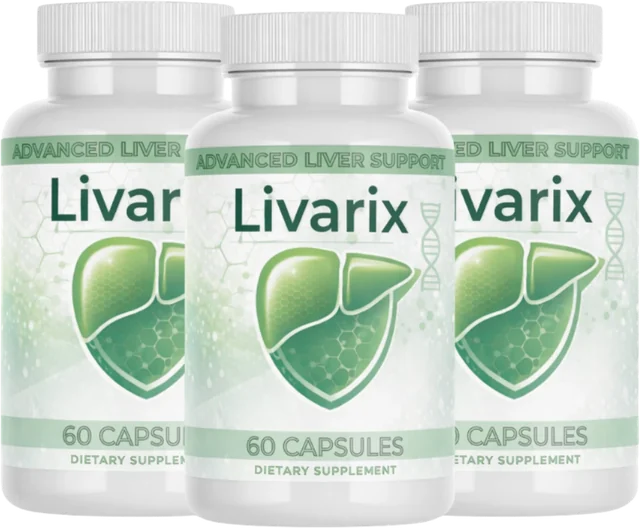
| Label words | Livarix, Advanced Liver Support, 60 Capsules, Dietary Supplement |
| Directions (sales page) | Two capsules a day with a large glass of water, preferably in the morning with food; your bottle's directions come first |
| Named amounts (sales page) | Turmeric root 300 mg, beet root 200 mg, dandelion leaf 100 mg, artichoke extract 50 mg, ginger root 50 mg, milk thistle 50 mg, alfalfa leaf 20 mg, L-cysteine HCl 10 mg |
| Serving | Not stated; the amounts total 780 mg, which we read as per two-capsule serving |
| Who | Adults 18+ (pack); show the bottle to your doctor first, especially if you take medication (sales page) |
| Price | $79, $69 or $49 a bottle by pack; Prices when we checked on November 25, 2026; confirm at the live checkout. |
| Guarantee | 60 days (sales page); confirm the live policy |
What does the sales page list?
The sales page lists eight ingredients, each with an amount and a short claimed role. We show the amounts; we do not repeat the claimed roles, which are marketing wording.
| Ingredient (as listed) | Amount | Part of the plant or form | Detail given |
|---|---|---|---|
| Turmeric powder (root) | 300 mg | Root powder | No curcumin figure |
| Beet root powder | 200 mg | Root powder | None |
| Dandelion powder (leaf) | 100 mg | Leaf powder | None |
| Artichoke extract | 50 mg | Extract | Standardized to 5% cynarin |
| Ginger powder (root) | 50 mg | Root powder | None |
| Milk thistle powder | 50 mg | Powder | No silymarin figure |
| Alfalfa powder (leaf) | 20 mg | Leaf powder | None |
| L-Cysteine HCl | 10 mg | Amino acid salt | None |
The amounts total 780 mg. The page does not say whether that is per capsule or per two-capsule serving. The seller's notes repeat the same list and add, simply, "bottle panel wins".
What is the serving size?
The serving size is not stated anywhere we looked, and it is the most important missing fact. If the 780 mg is per capsule, two capsules a day would double every amount; if it is per two-capsule serving, the amounts stand as listed.
We read the list as a two-capsule serving, because the sales page's daily direction is two capsules and the figures are presented as one formula. But that is our reading, not a fact. The FDA's labeling guide explains that the Supplement Facts panel must show the serving size and the amount of each ingredient per serving,[1] so your bottle will settle it. Check the serving size line before your first dose.
How do I read the panel on my bottle?
You read the panel from the top down: serving size, servings per container, then each ingredient with its amount, then the other ingredients line below the box. Here is what each part tells you.
- Serving size: how many capsules make one serving. Compare it with the directions.
- Servings per container: with 60 capsules, two per serving would give 30 servings.
- Amount per serving: the figure for each ingredient. Compare it with the sales page's list.
- % Daily Value: shown only for nutrients that have one; most herbs here will show a dagger or a dash.
- Other ingredients: the capsule shell, fillers and flow agents.
- Allergen statement: if any major allergen is present.
- Directions and warnings: usually beside or below the panel.
- Name and address: of the manufacturer or distributor.
If any of these is missing or unreadable, ask the order desk in the seller's notes, +1 (302) 200-3480, before you take a capsule.
Why are there no Daily Values?
There are probably no Daily Values for most ingredients because they are herbs and an amino acid, not vitamins or minerals with an established daily amount. On a supplement panel, such ingredients are usually marked with a symbol meaning that no Daily Value has been set.
That is normal and not a warning sign. It does mean the panel cannot tell you whether an amount is "a lot" or "a little" by comparing it with a standard. For that you would need a pharmacist or the published research, and the sources we cite do not set standard amounts for these uses.
What do "powder" and "extract" mean?
A powder is the dried plant part ground up, while an extract is a concentrate made by soaking the plant in a liquid and drying the result. Extracts can carry more of certain compounds per milligram than powders, which is why some are "standardized" to a stated percentage.
On this list, only artichoke is described as an extract, standardized to 5% cynarin. The rest are powders, including milk thistle, which is often sold elsewhere as a standardized extract of silymarin. NCCIH notes that milk thistle products can contain silymarin amounts that differ from their labels,[2] and that turmeric products vary widely in their curcumin content.[3] A powder with no standardization gives you less information about the active compounds.
What should the other ingredients line show?
The other ingredients line should show what the capsule shell is made of and any fillers or flow agents. Common shells are gelatin, which comes from animals, or a plant-based material such as cellulose.
That matters if you avoid animal products or follow a religious diet. It also matters for allergies: the FDA lists nine major food allergens, including milk, eggs, fish, shellfish, tree nuts, peanuts, wheat, soybeans and sesame, that must be declared.[4] None of the eight listed ingredients is one of those, but fillers and shells are separate, so read the line.
What warnings might the panel carry?
We could not see the warnings, so read them on your bottle. The sales page's only warning is to show the bottle to your doctor before taking it, especially if you take medication.
Based on the cautions in the sources for the eight ingredients, a complete label would sensibly address pregnancy and nursing, people under 18, liver, gallbladder and bile duct conditions, daisy-family allergies and people who take medicines. If your bottle's warnings are short, use the safety page as a guide and ask your pharmacist. A short warning is not evidence that a product is safer.
Is the label the same as the sales page?
We could only compare the front label with the sales page, and they agree on the name and the 60-capsule count. The front label adds "Advanced Liver Support"; the sales page adds the ingredient list, the claimed roles, the seller's badges and the facility claim.
The ingredient amounts and serving size live on the back or side of the bottle, which we did not see. Until a panel photo arrives, every amount on this site is marked "per the sales page". The label claims page explains the front-label wording.
What if the panel differs from this page?
If the panel differs from this page, follow the panel, note the difference and tell your doctor the panel's figures. Formulas and labels change, and an older or newer bottle may differ from the sales page we checked on November 25, 2026.
If the difference matters to you, for example a new ingredient you are allergic to, you can ask for a refund under the sales page's 60-day guarantee before you take any capsules. Keep the bottle and the order email. The guarantee page explains the process.
How do the amounts compare with each other?
Turmeric and beet root make up most of the listed weight: 500 of the 780 mg, or about 64 percent. Dandelion adds another 100 mg, and the remaining five items together come to 180 mg.
| Group | Ingredients | Listed amount | Share of 780 mg |
|---|---|---|---|
| Largest two | Turmeric root, beet root | 500 mg | about 64% |
| Middle | Dandelion leaf | 100 mg | about 13% |
| Smaller five | Artichoke, ginger, milk thistle, alfalfa, L-cysteine | 180 mg | about 23% |
The milk thistle amount, 50 mg of plain powder, is small compared with how milk thistle is often sold, and the sales page gives no silymarin figure. That is worth knowing if milk thistle is the ingredient that drew you to the product. The milk thistle page explains what sources say about it.
Can a pharmacist help with the panel?
Yes. A pharmacist can read the panel with you, compare the amounts with your medicines and tell you whether anything on it needs a second look. Bring the bottle, or a clear photo of the panel and the warnings.
Ask in particular about turmeric, dandelion and alfalfa, which carry the most specific cautions in the sources we cite, and about the other ingredients line if you have allergies. The medicines page has a question builder that turns the cautions into plain questions.
Why does the "bottle panel wins" rule matter?
The rule matters because the panel is the label, and the label is what the seller is responsible for. The FDA says firms are responsible for their products and labels, and that supplements are not approved before sale.[5] A sales page is advertising and can change at any time.
So when we say "per the sales page", we mean "until you see the panel". It is the same advice we would give for any supplement: read the bottle, not the ad.
Frequently asked questions
What is the Livarix Capsules serving size?
It is not stated anywhere we looked. Check the serving size line on your bottle's panel before the first dose.
How much turmeric is in Livarix Capsules?
The sales page lists 300 mg of turmeric root powder. It does not say whether that is per capsule or per serving.
Does Livarix Capsules list Daily Values?
Probably not for most ingredients, because herbs and amino acids usually have no set Daily Value.
What is the Livarix Capsules capsule shell made of?
We do not know. Read the other ingredients line on the panel, or ask the order desk.
Why does this site not show a Livarix Capsules panel photo?
None was supplied. We mark every amount "per the sales page" until a clear panel photo arrives.
Medical review: Dr. Alexis David, MD, Physician. Review covers label accuracy and safety wording. It is not an endorsement. How review works.
Sources
- FDA: Dietary Supplement Labeling Guide: Chapter IV, Nutrition Labeling. www.fda.gov
- NCCIH: Milk Thistle. www.nccih.nih.gov
- NCCIH: Turmeric. www.nccih.nih.gov
- FDA: Food Allergies. www.fda.gov
- FDA: FDA 101: Dietary Supplements. www.fda.gov
Safety: Livarix Capsules is a dietary supplement, not a medicine. Follow the directions printed on your bottle (the sales page says two capsules a day with water, in the morning with food) and talk to your healthcare provider first, especially if you have a liver, gallbladder or bile duct condition, take any prescription medicine (including blood thinners, diabetes or blood pressure medicines and water pills), have lupus, gout or a hormone-sensitive condition, are allergic to ragweed or daisy-family plants, or are pregnant or nursing. Stop and call a doctor if you notice yellow skin or eyes, dark urine, unusual tiredness, nausea or poor appetite. Not for anyone under 18.
This site is an independent information site, not the manufacturer of Livarix Capsules. We may earn from order links on this site; order links are marked sponsored. *These statements have not been evaluated by the Food and Drug Administration. This product is not intended to diagnose, treat, cure or prevent any disease. Page updated November 25, 2026.