How does Livarix Capsules work?
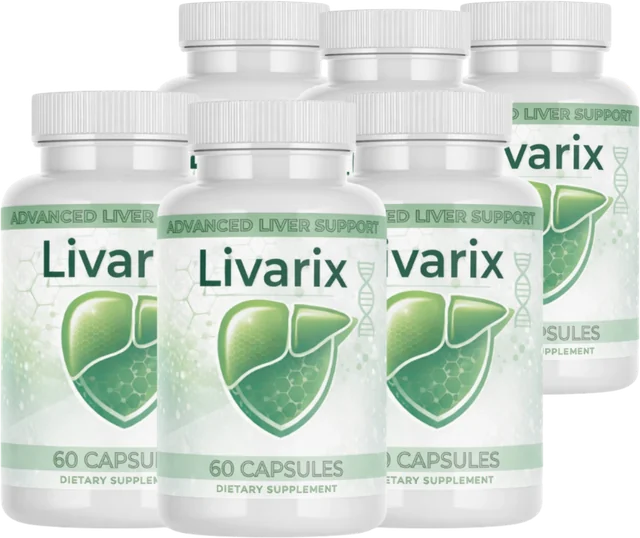
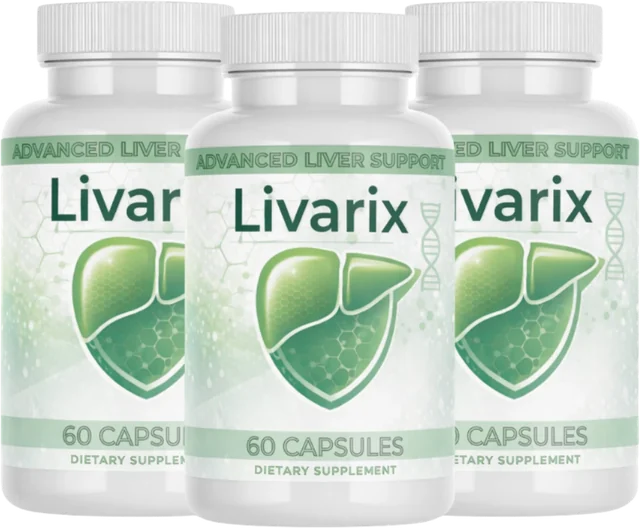
The label does not explain how Livarix Capsules works, and the sources this site cites do not show that it works for the liver. The front label prints "Advanced Liver Support", which is marketing wording about the body, and the sales page assigns each of its eight ingredients a role in the liver or digestion.
This page puts each claimed role next to what the cited source says. We describe the sales page's roles in general terms rather than repeating its exact phrases as facts, because several of them are the kind of health claim that needs competent and reliable scientific evidence, which the FTC says is required for health advertising.[1]
- 1Two capsulesper the sales page
- 2Large glass of waterper the sales page
- 3Morning, with foodpreferably, per the sales page
- 430 days a bottle60 capsules, two a day
What roles does the sales page claim?
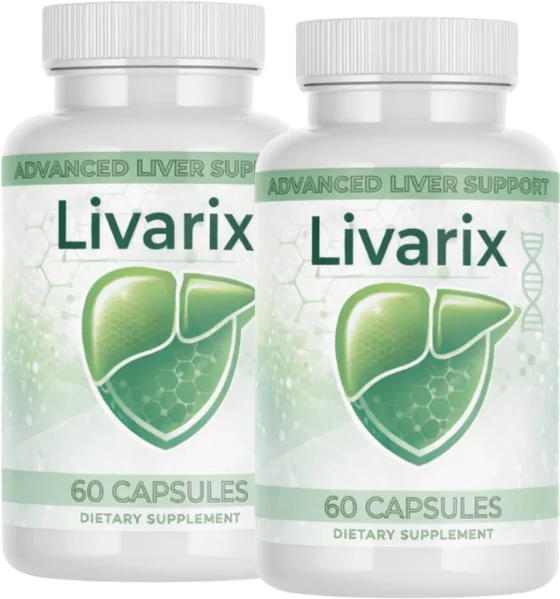
The sales page gives each ingredient a one- or two-word role, such as "Bile flow", "Liver protection" or "Cell regeneration", quoted here only as the sales page prints them. It then tells a longer story about how the liver handles everyday strain.
We do not repeat those roles as facts, for a simple reason: the sources do not support them. The table shows each ingredient, the kind of role the sales page gives it, and what our source says.
| Ingredient | Kind of role on the sales page | What the cited source says |
|---|---|---|
| Turmeric root, 300 mg | "Anti-inflammatory" | Research extensive but not strong enough to confirm any benefit; liver injury reported (NCCIH, LiverTox) |
| Beet root, 200 mg | "Detox support" | Our sources cover its pigment and urine colour only |
| Dandelion leaf, 100 mg | "Bile flow" | No compelling evidence for any condition (NCCIH) |
| Artichoke extract, 50 mg | "Liver protection" | Accepted only for indigestion, on traditional use (European Medicines Agency) |
| Ginger root, 50 mg | "Digestive health" | Not covered for this use in our source |
| Milk thistle, 50 mg | "Cell regeneration" | Insufficient evidence; two NIH-funded trials found no benefit (NCCIH) |
| Alfalfa leaf, 20 mg | "Alkalizing support" | Two small cholesterol trials; nothing for the liver (Memorial Sloan Kettering) |
| L-cysteine HCl, 10 mg | "Glutathione precursor" | An amino acid the body uses to make glutathione; 10 mg not studied (Mount Sinai) |
What does the liver actually do?
The liver is a large organ that processes nutrients, breaks down many medicines and other substances, makes proteins and produces bile, which helps digest fat. It does this work all the time, without help from supplements.
That last point matters, because supplement marketing often implies the liver needs outside help to work. Our sources do not support that for any ingredient here. If you have a concern about your liver, a blood test ordered by your doctor is the way to find out how it is doing.
Does turmeric work the way the sales page suggests?
Our sources do not show that it does. NCCIH says research on turmeric and curcumin for fatty liver disease, osteoarthritis and high cholesterol is extensive but not strong enough to confirm any health benefit[2]. LiverTox adds that rigorous proof of turmeric's efficacy in any medical condition is lacking.
LiverTox also says turmeric appears to have become the most common cause of clinically apparent herbal-related liver injury in the United States.[3] So the best-known fact about turmeric and the liver in our sources is a caution, not a benefit. The turmeric page explains both.
Does milk thistle renew liver cells?
Our sources do not show that it does. NCCIH says the evidence on milk thistle for liver conditions is insufficient, and that two studies it funded, in hepatitis C and non-alcoholic steatohepatitis, found no benefit from silymarin[4].
LiverTox notes that milk thistle has not been implicated in causing liver injury, so it is one of the lower-risk ingredients here. It is also a small amount, 50 mg of powder with no silymarin figure. The milk thistle page has the detail.
Is artichoke a liver protector?
The source we cite does not say so. The European Medicines Agency accepts artichoke leaf only for digestive complaints such as indigestion, fullness, bloating and wind, on the basis of traditional use rather than trials[5]. It also says artichoke leaf is not for people with certain liver and bile duct disorders.
So the one regulator's view we cite points to a digestive use and to a liver-related caution, not to a protective role. The artichoke page explains the exclusions.
Does dandelion increase bile flow?
Our source does not support that. NCCIH says there is very little research on dandelion's effects on human health and no compelling scientific evidence for its use for any condition[6]. It does list possible interactions with blood thinners, diabetes drugs and water pills.
Dandelion has a long traditional reputation in this area, but tradition is not evidence. The dandelion page explains what is known.
What about the other four ingredients?
The other four ingredients, beet root, ginger, alfalfa and L-cysteine, have no evidence for a liver role in our sources. Their pages explain what the sources do cover: beeturia for beet root, digestive side effects for ginger, clear avoid-groups for alfalfa, and the amino acid's role in the body for L-cysteine.
That leaves a formula in which five of eight ingredients have nothing in our sources for the use on the label, and the other three have insufficient evidence, a traditional digestive use only, or a liver caution. That is the honest summary of how it works, as far as the evidence goes.
Why does the sales page list research references?
The sales page lists research references, including reviews on turmeric, beet root, dandelion, artichoke, ginger, silymarin and L-cysteine, and says the product is not endorsed by or affiliated with those authors or journals. A reference list is not the same as evidence that a product works.
References show that a topic has been studied, not what the studies found, how strong they were or whether they apply to this formula at these amounts. We did not review each reference, and we do not summarize them here. The sources we cite are summaries by health agencies that weigh that research for the public, which is why we rely on them.
Does "Advanced" mean anything?
"Advanced" on the label is a marketing word, not a technical term. It does not refer to a test, a standard or a stronger formula, and there is no regulatory meaning attached to it for supplements.
Read it the way you would read "premium" or "ultimate" on any product: as a description the seller chose. The amounts on the panel, and what the sources say about them, are what tell you about the formula.
Do the ingredients work better together?
Our sources do not study this combination, so there is no evidence that the eight work better together. Combination products are sometimes marketed as having combined effects, but that is a claim, not a finding.
Combination also has a downside. LiverTox notes that most supplements on the market are mixtures, and that this makes it hard to tell which ingredient caused a liver problem if one occurs.[7] The European Medicines Agency's artichoke summary explicitly does not cover combinations. A single-ingredient product is easier to judge, for good or ill.
Why does the label not explain a mechanism?
The label does not explain a mechanism because supplement labels are limited in what they may claim. Wording about the body, such as "Advanced Liver Support", is allowed if it carries a statement that the FDA has not evaluated it, but it may not claim to diagnose a disease or act as a medicine for one.[8]
That keeps label wording general. The more specific roles appear on the sales page, which is advertising. The label claims page explains the rules in more detail.
Is "how it works" the same as "whether it is safe"?
No. Whether something works and whether it is safe are separate questions, and this product shows why. The ingredient with the most research, turmeric, is also the one with the main caution.
Before thinking about how it works for you, check whether it is safe for you. The sales page itself says to show the bottle to your doctor first, especially if you take medication. These are the groups our sources say should ask:
- People with liver, gallbladder or bile duct conditions.
- People who are pregnant, trying to conceive or breastfeeding.
- People with lupus, gout or a hormone-sensitive condition.
- People allergic to ragweed or daisy-family plants.
- People taking blood thinners, diabetes medicines or water pills.
The safety page explains each one.
What would show that it works?
Good evidence would come from well-designed trials of this formula, or at least of its main ingredients at these amounts, in people like you, measuring outcomes that matter. None of that appears in our sources.
Until it does, the fair position is to regard any benefit as unproven. If you choose to try the capsules, do so with your doctor's agreement, keep a short log, watch for warning signs and decide before the 60-day guarantee closes. The results page explains how to judge any change you notice.
Frequently asked questions
Does Livarix Capsules work?
Our sources do not show that its ingredients work for the liver. The label explains no mechanism and makes no tested claim.
What is the main active ingredient in Livarix Capsules?
The largest is turmeric root, at 300 mg per the sales page. Its evidence is not strong enough to confirm a benefit.
Does Livarix Capsules "detox" the liver?
Our sources do not support a "detox" role for any of the eight ingredients, and the label makes no such claim.
Is Livarix Capsules backed by science?
The sales page lists research references, but the sources we cite describe the evidence as insufficient or weak.
Can Livarix Capsules replace my liver medicine?
No. Never replace a prescribed medicine with a supplement. Speak to your doctor.
Medical review: Dr. Alexis David, MD, Physician. Review covers label accuracy and safety wording. It is not an endorsement. How review works.
Sources
- FTC: Health Products Compliance Guidance. www.ftc.gov
- NCCIH: Turmeric. www.nccih.nih.gov
- LiverTox (NIDDK, NCBI Bookshelf): Turmeric. www.ncbi.nlm.nih.gov
- NCCIH: Milk Thistle. www.nccih.nih.gov
- European Medicines Agency: Artichoke leaf (Cynarae folium) herbal summary. www.ema.europa.eu
- NCCIH: Dandelion. www.nccih.nih.gov
- LiverTox (NIDDK, NCBI Bookshelf): Herbal and Dietary Supplements. www.ncbi.nlm.nih.gov
- FDA: Structure/Function Claims. www.fda.gov
Safety: Livarix Capsules is a dietary supplement, not a medicine. Follow the directions printed on your bottle (the sales page says two capsules a day with water, in the morning with food) and talk to your healthcare provider first, especially if you have a liver, gallbladder or bile duct condition, take any prescription medicine (including blood thinners, diabetes or blood pressure medicines and water pills), have lupus, gout or a hormone-sensitive condition, are allergic to ragweed or daisy-family plants, or are pregnant or nursing. Stop and call a doctor if you notice yellow skin or eyes, dark urine, unusual tiredness, nausea or poor appetite. Not for anyone under 18.
This site is an independent information site, not the manufacturer of Livarix Capsules. We may earn from order links on this site; order links are marked sponsored. *These statements have not been evaluated by the Food and Drug Administration. This product is not intended to diagnose, treat, cure or prevent any disease. Page updated November 25, 2026.