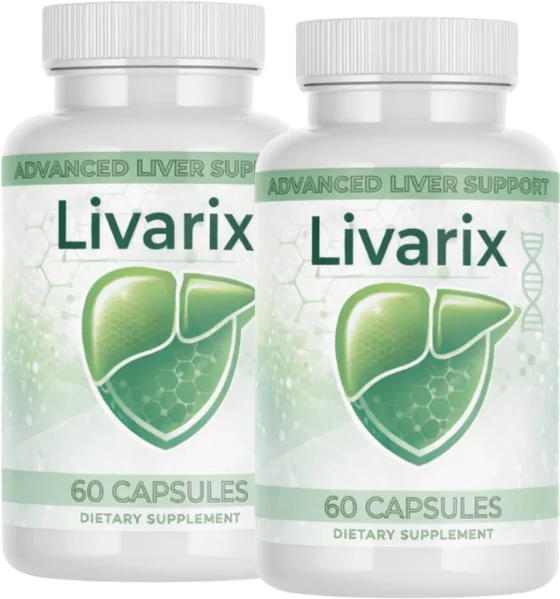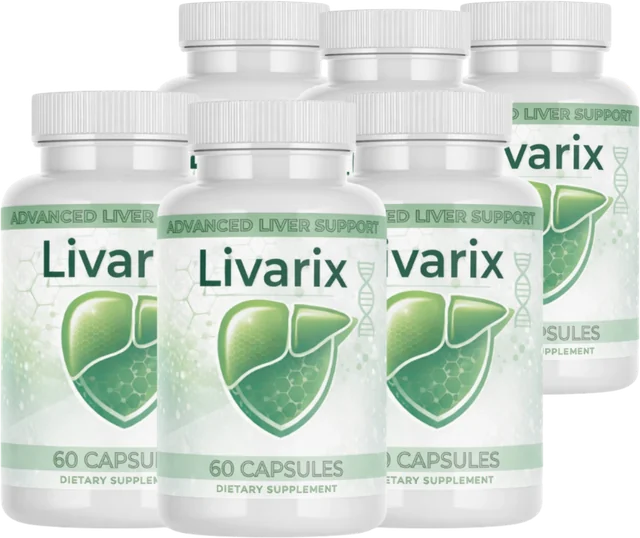
How much turmeric is in Livarix Capsules?
The sales page lists 300 mg of turmeric powder (root) in Livarix Capsules, the largest of its eight ingredients. It gives no curcumin figure and does not say whether the 300 mg is per capsule or per two-capsule serving, so check the panel on your bottle.
Turmeric is the yellow root used as a spice in curry. Its best-known compound is curcumin, which gives it its colour. In this product it appears as plain root powder, not as a concentrated curcumin extract. That detail matters, as the sections below explain.

What does the evidence say about turmeric?
The evidence on turmeric is extensive but not strong enough to confirm any health benefit, according to NCCIH. That includes research on fatty liver disease, osteoarthritis and high cholesterol.[1]
NCCIH adds that early studies suggest oral turmeric or curcumin may improve some measures in fatty liver disease, but that it is not known which measures improve consistently. Products also vary widely in their curcumin content, and many add piperine from black pepper to increase absorption, which makes studies hard to compare. LiverTox puts it plainly: rigorous proof that turmeric is effective in any medical condition is lacking.[2]
| Question | What the source says |
|---|---|
| Is there evidence for the liver? | Research on fatty liver is extensive but not strong enough to confirm a benefit (NCCIH) |
| Do products differ? | Yes, widely, in curcumin content; many add piperine (NCCIH) |
| Is it proven for any condition? | Rigorous proof of efficacy is lacking (LiverTox) |
| Is it safe short term? | Standard oral forms are likely safe at recommended amounts for 2 to 3 months (NCCIH) |
What is the liver caution?
The liver caution is that turmeric has been linked to liver injury in some people. LiverTox says turmeric appears to have become the most common cause of clinically apparent herbal-related liver injury in the United States.[2]
Most cases have been attributed to highly bioavailable forms of curcumin, which are made to be absorbed more easily. But LiverTox also describes cases with unadulterated ground turmeric powder and even with turmeric herbal tea. The injury appears to be idiosyncratic, perhaps immune-related, which means it does not simply depend on taking too much. Most cases resolve after stopping, and LiverTox notes that a severe outcome is more likely if turmeric is continued after signs of liver injury appear.
That last point is the practical one. If you take any turmeric product, know the signs, and stop at the first one.
What are the signs to stop?
The signs to stop are the ones NCCIH lists for turmeric products: fatigue, nausea, poor appetite, dark urine and jaundice, which is yellowing of the skin or the whites of the eyes. If you notice any of them, stop and contact a health care provider.[1]
- Yellow skin or yellow whites of the eyes.
- Dark urine, like tea or cola.
- Unusual tiredness that is new.
- Nausea, vomiting or poor appetite.
- Itching all over, or pain in the upper right belly.
- Pale or clay-coloured stools.
LiverTox notes that many people with supplement-related liver injury have mild symptoms or none, with only raised liver enzymes on a blood test.[3] So if you have regular blood tests, tell your doctor you take a turmeric product. The liver warning signs page has a check you can run.
Is plain turmeric powder safer than curcumin extracts?
Plain turmeric powder is less concentrated than curcumin extracts, and most reported liver cases involved highly absorbable curcumin products. But LiverTox also describes cases with plain powder, so "plain" does not mean "risk-free".
What we can say is that 300 mg of root powder is a modest amount compared with many turmeric supplements, and that this product does not state any added piperine or absorption enhancer. Neither fact rules out a reaction, because the injury appears to be idiosyncratic. NCCIH notes that the liver and pregnancy concerns relate mainly to supplement-level or concentrated amounts, not to cooking with turmeric.[1]
What other side effects can turmeric cause?
Turmeric taken by mouth can cause nausea, vomiting, heartburn, stomach upset, diarrhea or constipation, according to NCCIH.[1] These are usually mild. The sales page's direction to take the capsules with food may help some people with stomach upset, though we have no source that says so for this product.
If you have heartburn or a sensitive stomach, start by taking the capsules exactly as directed and watch how you feel. If a side effect does not settle, stop and ask your pharmacist. The side effects page lists the notes for all eight ingredients.
Is turmeric safe in pregnancy and breastfeeding?
NCCIH says turmeric supplements may be unsafe during pregnancy, and that little is known about the safety of amounts above those in food while breastfeeding.[1] Ask your doctor or midwife before taking Livarix Capsules if you are pregnant, trying to conceive or breastfeeding.
Cooking with turmeric is a different matter; the caution is about supplement amounts. The pregnancy and nursing page covers the other ingredients with pregnancy notes, including alfalfa.
Does turmeric interact with medicines?
NCCIH does not list specific drug interactions for turmeric, but it advises anyone who takes medicine to talk to a provider before using herbal products, because some herbs and drugs interact harmfully.[1] That is the right approach here.
Tell your pharmacist about every medicine you take, including blood thinners, diabetes medicines and anything that affects the liver. If you already take a medicine that is processed by the liver or that has liver warnings, ask before adding any turmeric product. The medicines page has a question builder.
Who should ask before taking turmeric?
Anyone with a liver condition, anyone who has had liver injury from a medicine or supplement, and anyone who is pregnant should ask before taking a turmeric product. So should people who take regular medicines, and people who drink alcohol heavily.
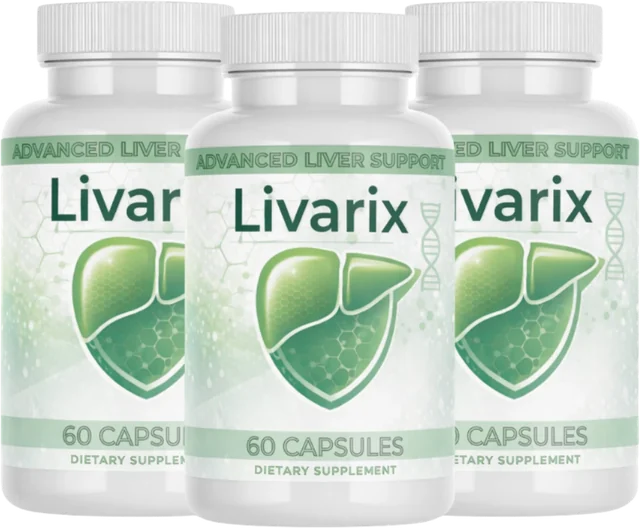
The sales page itself says to show the bottle to your doctor before taking it, especially if you take medication. For a product sold with "Advanced Liver Support" on the label, a short conversation about your liver history is the sensible first step. If your doctor agrees, ask whether a liver blood test before you start, and again later, would be useful.
How long can I take turmeric?
NCCIH says standard oral forms of turmeric are likely safe at recommended amounts for up to 2 to 3 months.[1] That is a statement about what has been studied, not a limit printed on this product.
A 6-bottle pack of Livarix Capsules lasts 180 days at the sales page's two capsules a day, which is longer than that period. That does not mean it is unsafe for six months; it means there is less evidence for longer use. Talk to your doctor about how long to take it, and stop at any warning sign.
What should I tell my doctor?
Tell your doctor the product name, the turmeric amount from your bottle's panel, how many capsules you take, when you started and everything else you take. A list on paper or your phone is easiest.
Ask three questions:
- Is a turmeric product sensible for me, given my liver history and medicines?
- Should I have a liver blood test before I start, or after a few weeks?
- Which signs should make me stop and call you straight away?
If you already take another turmeric or curcumin product, say so. Taking two products with the same ingredient adds up, and LiverTox notes that supplements made of many ingredients make it hard to tell which one caused a problem if one occurs.[3]
Does the FDA check turmeric products?
The FDA does not approve dietary supplements, including turmeric products, for safety or effectiveness before they are sold.[4] Firms are responsible for their own products and labels, and the FDA can act when safety problems arise.
That means no one checks a turmeric product's contents before it reaches you. NCCIH makes the same point about turmeric specifically. Reading the panel, buying from a seller you can trace and reporting any problem through the FDA's Safety Reporting Portal are the checks available to you. The legit page lists what we could verify about this seller.
What does "Advanced Liver Support" have to do with turmeric?
The front label's "Advanced Liver Support" is marketing wording about the body, and the label does not tie it to any one ingredient. The sales page assigns turmeric a role in the liver, which we do not repeat because the sources do not support it.
The tension is worth stating plainly: the ingredient listed most prominently in a liver-themed product is also the herb most often linked to supplement-related liver injury in the US. Most people will have no problem, but you deserve to know both sides. The how it works page goes through each claimed role against the sources.
Frequently asked questions
Is the turmeric in Livarix Capsules curcumin?
It is listed as turmeric root powder, which contains curcumin. No curcumin amount is given.
Can turmeric in Livarix Capsules hurt my liver?
It is uncommon, but LiverTox reports liver injury with turmeric products, including plain powder. Stop and call a doctor at any warning sign.
Does Livarix Capsules turmeric contain black pepper?
Piperine or black pepper is not on the sales page's list. Check the panel on your bottle.
How much turmeric do I take with two Livarix Capsules?
300 mg if the listed amounts are per two-capsule serving; double if they are per capsule. The panel's serving size decides.
Should I stop Livarix Capsules before a blood test?
Ask your doctor. Tell them you take a turmeric product so they can read the results with that in mind.
Medical review: Dr. Alexis David, MD, Physician. Review covers label accuracy and safety wording. It is not an endorsement. How review works.
Sources
- NCCIH: Turmeric. www.nccih.nih.gov
- LiverTox (NIDDK, NCBI Bookshelf): Turmeric. www.ncbi.nlm.nih.gov
- LiverTox (NIDDK, NCBI Bookshelf): Herbal and Dietary Supplements. www.ncbi.nlm.nih.gov
- FDA: FDA 101: Dietary Supplements. www.fda.gov
Safety: Livarix Capsules is a dietary supplement, not a medicine. Follow the directions printed on your bottle (the sales page says two capsules a day with water, in the morning with food) and talk to your healthcare provider first, especially if you have a liver, gallbladder or bile duct condition, take any prescription medicine (including blood thinners, diabetes or blood pressure medicines and water pills), have lupus, gout or a hormone-sensitive condition, are allergic to ragweed or daisy-family plants, or are pregnant or nursing. Stop and call a doctor if you notice yellow skin or eyes, dark urine, unusual tiredness, nausea or poor appetite. Not for anyone under 18.
This site is an independent information site, not the manufacturer of Livarix Capsules. We may earn from order links on this site; order links are marked sponsored. *These statements have not been evaluated by the Food and Drug Administration. This product is not intended to diagnose, treat, cure or prevent any disease. Page updated November 25, 2026.